
There’s an intentionality about photography that makes you notice things you hadn’t truly considered before. Like the deep, layered history of this city you’ve called home for the past 12 years.
Karibu Nairobi. That’s the invitation. Welcome. Open your eyes. Look around you — and I’ll tell you how every brick, every lane was laid down with purpose. How every street has a story. Karibu Nairobi.
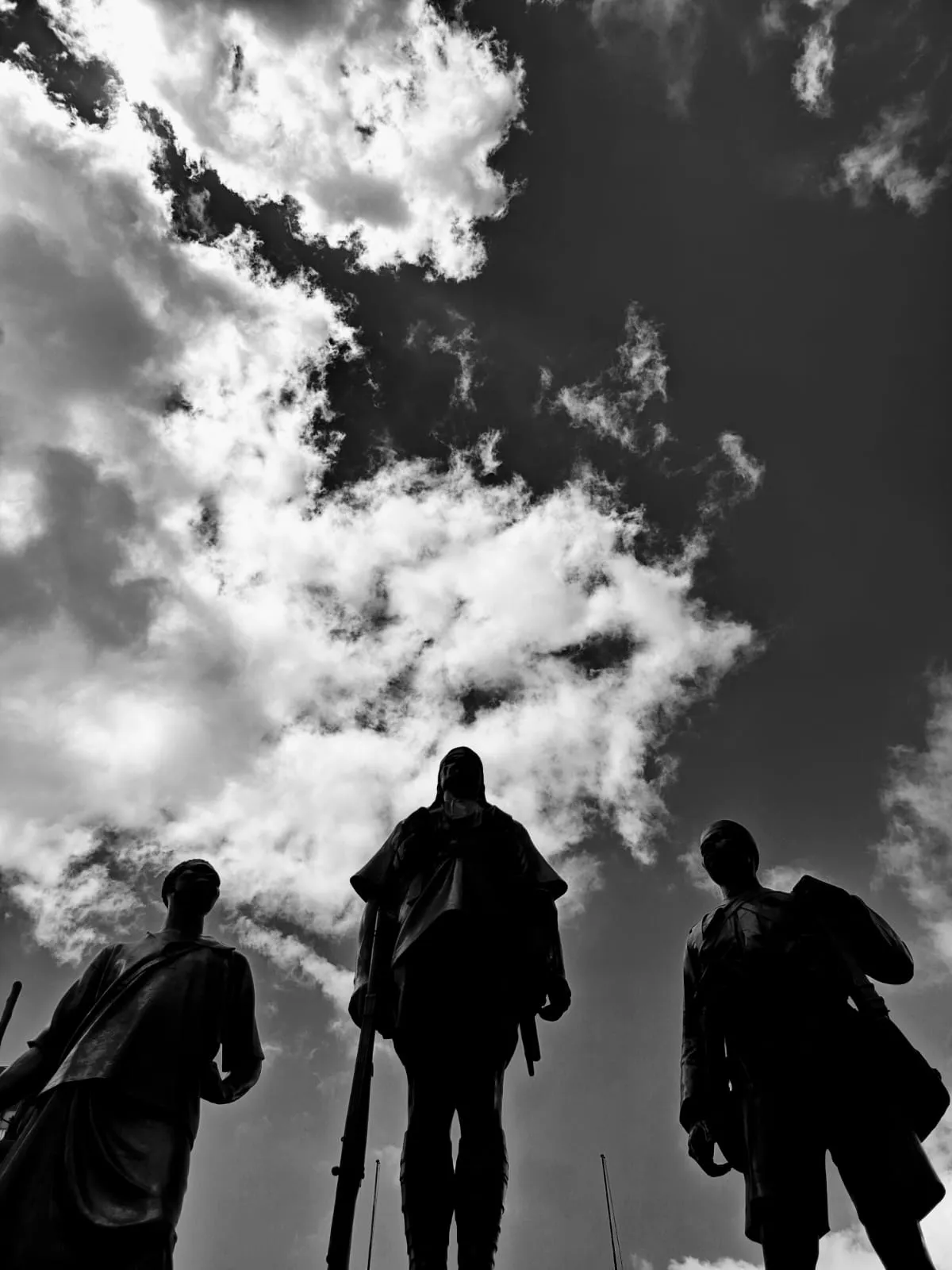
The tour is meant to begin at 10:00 a.m. When you arrive — only two minutes late, at 10:02 — you find the group already gathered outside McMillan Library. Their eyes are trained on the majestic structure. Ears tuned in to Keith Ang’ana, who’s deep in a story about “Ju & Ja,” the iconic lion statues at the entrance. He says they were allegedly stolen by Lord Delamere from their original placement and relocated here, though the full truth of their journey remains shrouded in speculation.
After this bit of history, Wango and Kimani — your designated photographers for the day — begin a hands-on demo. They break down the fundamentals of photography: framing, grid lines, zoom. Three small details that are about to completely change how you take pictures.
You’ve heard of these things before, of course. The rule of thirds, especially. But today, it finally clicks. And just like that, your photos look more intentional, more alive.
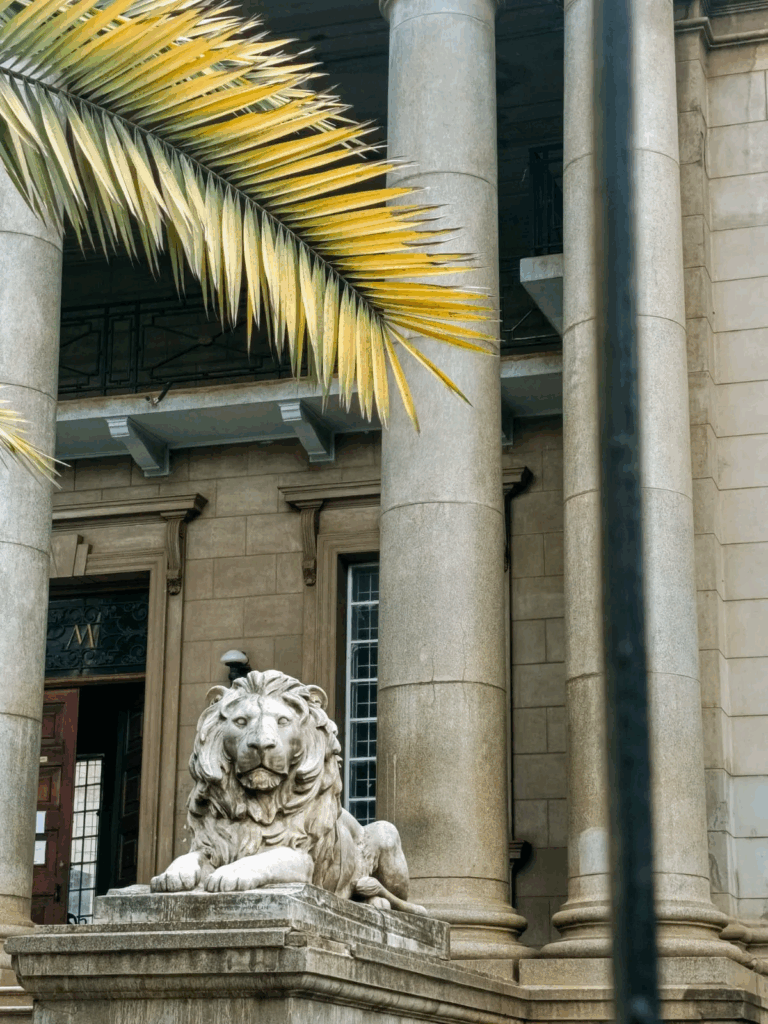
A few shots later, the group moves on to the King’s African Rifles monument. You’ve seen it before — it’s hard to miss, standing boldly on one of Nairobi’s main avenues — but you’ve never really looked at it. Never paused long enough to notice the deep, polished mahogany skin of the three soldiers. The way their placement and posture hint at rank: the general in the center, gaze fixed sternly ahead. To his left, an officer — upright but glancing to the side, as if momentarily distracted. And to his right, a native guide — relaxed, standing with that quiet confidence so often associated with rural folk.
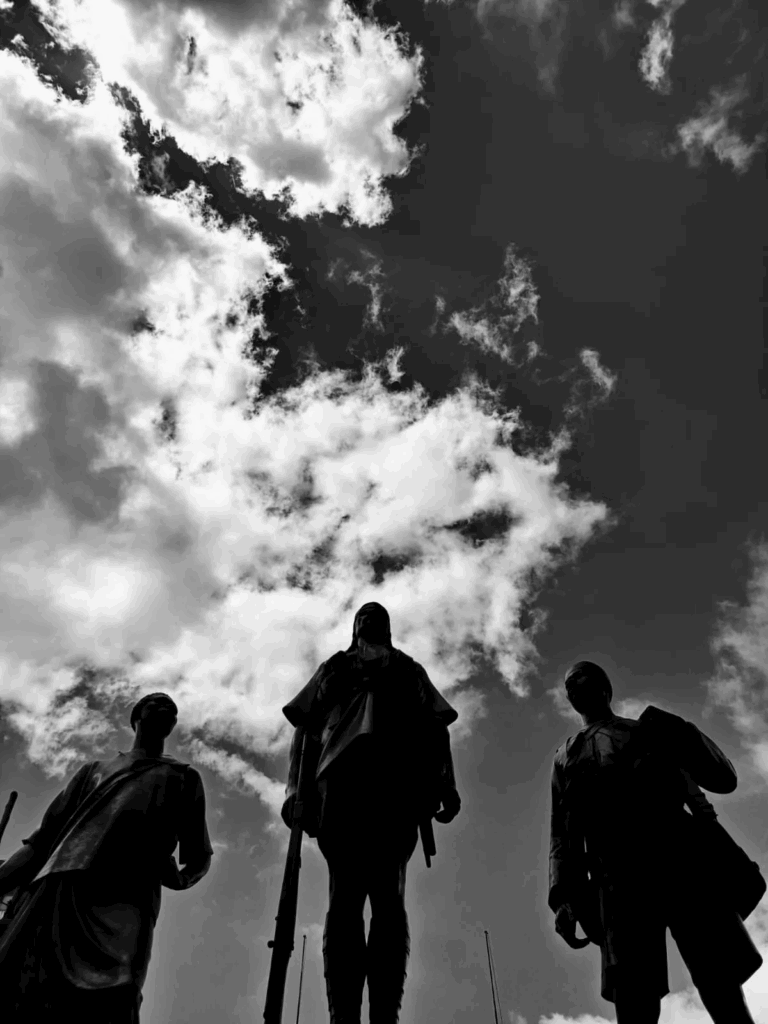
You’ve never read the plaque beneath their feet.
THIS IS TO THE MEMORY OF THE NATIVE AFRICAN TROOPS WHO FOUGHT: TO THE CARRIERS WHO WERE THE FEET AND HANDS OF THE ARMY: AND TO ALL OTHER MEN WHO SERVED AND DIED FOR THEIR KING AND THEIR COUNTRY IN EASTERN AFRICA IN THE GREAT WAR, 1914–1918.
IF YOU FIGHT FOR YOUR COUNTRY, EVEN IF YOU DIE, YOUR SONS WILL REMEMBER YOUR NAME.
The tour is brisk. You spend just enough time at each spot to snap some solid photos, and to spark a curiosity that makes you already plan a return.
As you stroll down Kenyatta Avenue, the buildings begin to whisper their age to you. Keith talks about Nairobi’s first ballroom/entertainment hall — now repurposed into a bank — and how it was built right across the street from the Stanley Hotel, strategically placed to ensure minimum staggering distance for the Happy Valley set and friends. You can almost feel the energy of the times — back when the whites ruled the country — and Nairobi was their playground.
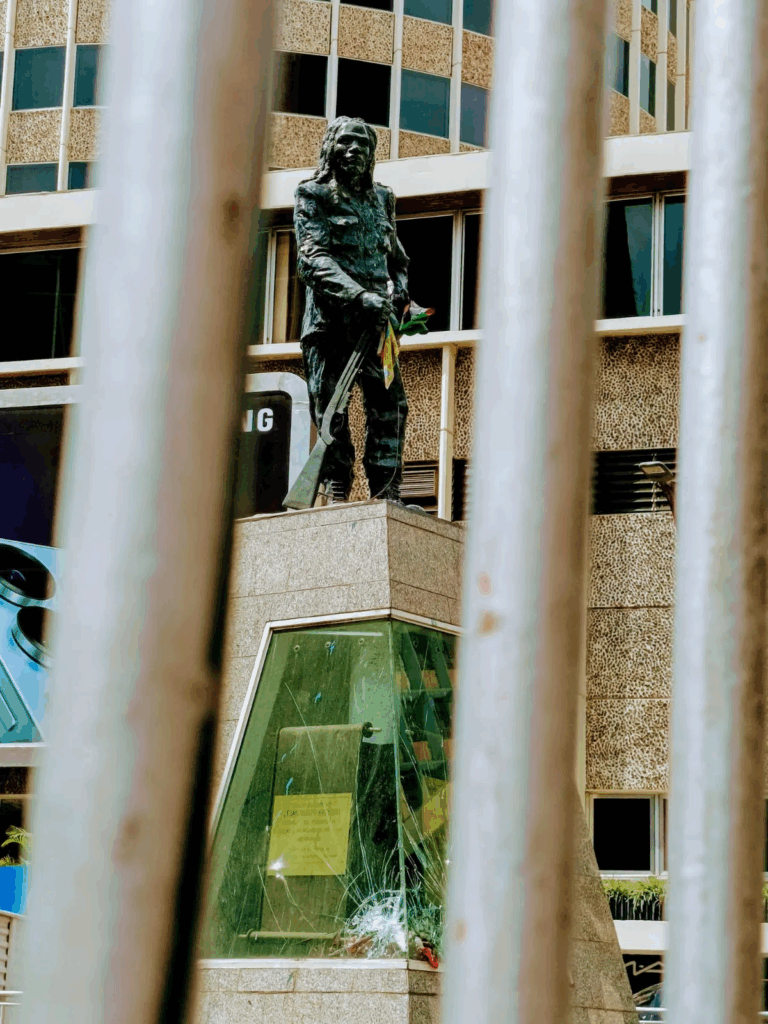
A turn onto Dedan Kimathi Street signals a shift — a new chapter in Kenya’s story. There, Dedan Kimathi stands mid-stride, bearing the symbols of the struggle — and not just his gun. In one hand, a flag — in the other, a handkerchief — recent additions by the people. The glass casing around his monument is shattered, possibly by a teargas canister or a stone. His jacket bears streaks of color from the water-based pepper spray the police used to deter protesters during the Gen-Z revolution just a year ago. 62 years after “independence”, the struggle continues.
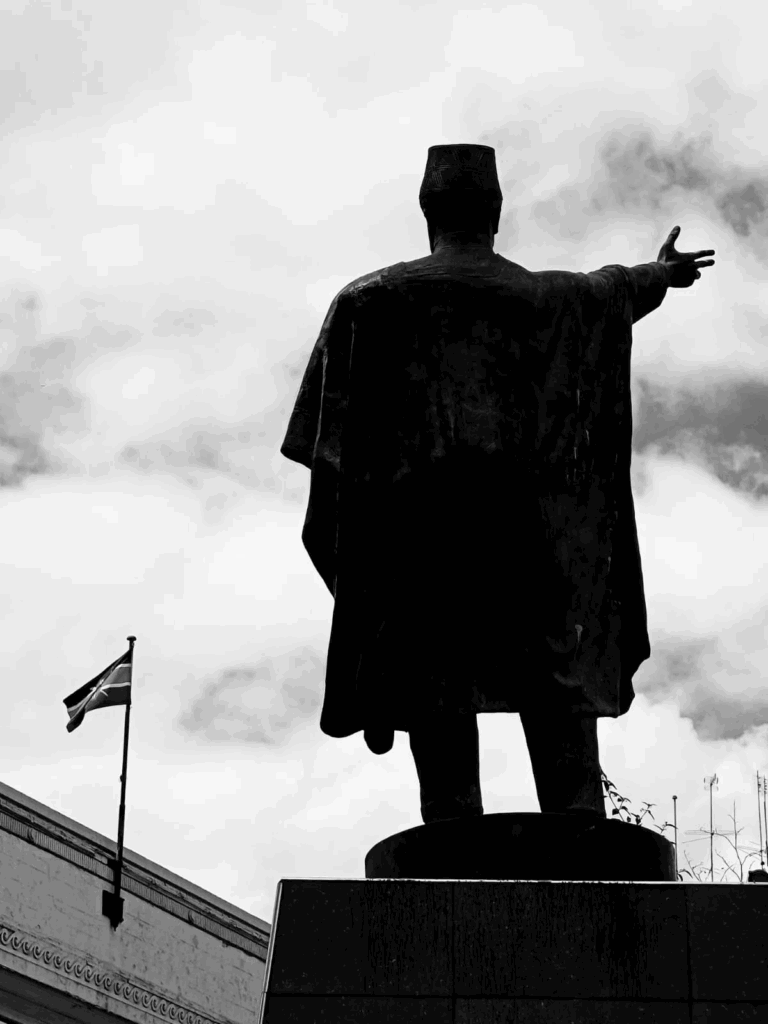
Then comes Tom Mboya — hand outstretched, seemingly showing the way forward. Tom Mboya — part man, part legend. His statue rises above one of the city’s busiest intersections. A magnet for Gor Mahia fans who gather there before and after matches, seeking a blessing.
The space around Archives teems with life. For a trained eye, the possibilities for street photography are endless.
Now deep in the pulsing heart of the CBD, we head toward Aga Khan Walk for a short health break — time to stretch, snack, visit the loo, and socialize. As you sit on the sidewalk munching your snack, a young beggar approaches. You harden your heart — you’ve learned to.
Here, one beggar begets another. The group is soon surrounded. The white tourists have it hardest — their skin color and presumed financial privilege has them at a disadvantage. An Arab man next to you asks what the polite Kenyan way of saying no to beggars is. You pause. You realize — there isn’t one. You explain: we either ignore them by completely avoiding their gaze, say a firm “No,” or murmur a vague “sio leo” — a false promise of a tomorrow that will never come.
He nods, then shares his own culture’s version:
“as’al allah ‘an yalqak eind hajatika.”
May Allah meet you at your point of need.
The words land soft and deep, like poetry. You’re momentarily silenced by the beauty of language.
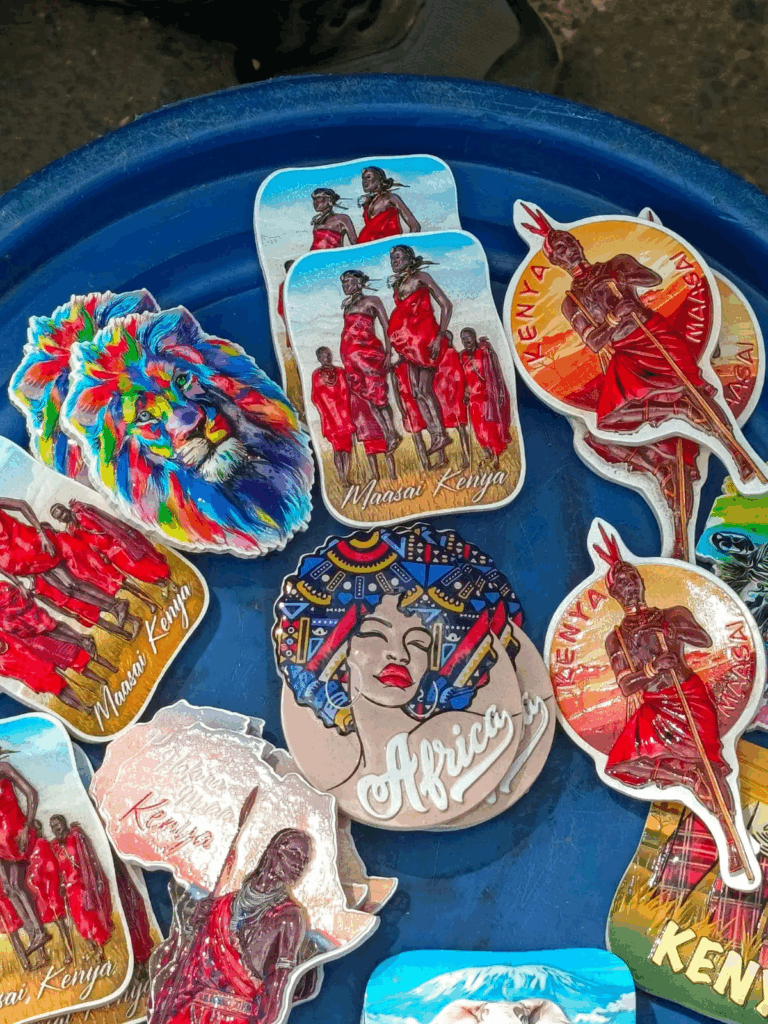
The final stop is Maasai Market. Though you don’t venture deep into the maze of stalls, you meet an elderly sculptor just outside. He sells you beautifully carved African mask for a steal. You thought you were decent at negotiation — until you witness a middle-aged West African woman talk down the price of fridge magnets to almost half. She’s not abrasive or aggressive. Her tone is calm, confident, kind. She negotiates like a seasoned diplomat — and still gets a smile from the vendor.
The tour wraps up with a group selfie, complete with bonus selfie tips for the boomers. No more awkward under-the-chin angles for them. Hooray!
Krb Nrb promises a follow-up zine-making session — where we’ll print our favorite photos, paste them alongside our notes, and archive our day in a tangible keepsake.
Some of us linger, unwilling to let the magic of the morning fade just yet. Friends from different lives, we walk together to Kilimanjaro restaurant for lunch and conversation. There, seated beside an avid newspaper reader, you learn a new game: the newspaper code word game. It’s oddly addictive.
By the time you leave — stomach full, spirits lifted — you walk away with three skills: phone photography, the art of negotiation, and how to solve a newspaper codeword puzzle.
Your day was well spent.